Category

Slate House

Slate House

Redecorating Hints and Tips

July 4, 2014

Whether you’re a serial re-decorator or a DIY-dodger, at some point in your life, you’ll be faced with a tired room that needs to be updated. It doesn’t matter if it’s a bedroom, kitchen  or living room, you’ll want to create a feeling of comfort and belonging – put simply,  when you walk in, you don’t want to  feel the need to walk out again! Of course, the way in which you decorate your home is purely down to personal preference but at  Slate House, we’ve put together these redecorating hints and tips to help get you off to a good start.

Colour

Let’s begin with colour. Whether consciously or not, our brains take in huge amounts of stimulation and it’s predominantly through our eyes. Unlike dogs, we see a full colour spectrum from red right through to violet, which allows for many colour scheme opportunities, but be aware that not all colours match. If you’re unsure about complementary colours, the charts below should point you in the right direction…
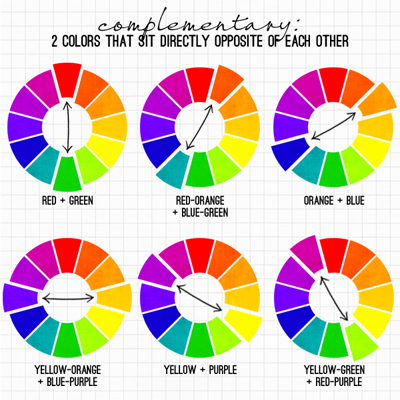
Photo Credit: brandigirlblog.com

Photo Credit: brandigirlblog.com

At Slate House, we suggest that you try utilising the wheel and experimenting. You may have always disliked the colour yellow for instance, but when paired with a complementary colour, you could find that you quite like it after all!

If you’re not brave enough to go further than the tester paint pots at your local DIY shop, it really doesn’t matter as you can still experiment with colour and textures in different ways. If you think of your room room as a canvas, a white canvas is classic, clean and smooth. Your room doesn’t have to be purple or pink to be exciting. White (or light) walls and ceilings can be your starting point and from there you can add colour and texture with furniture, decorations, cushions, throws, blankets, curtains, blinds, photographs, paintings, mirrors and anything else you might want to hang and stick or screw to your walls.

White room, eclectic style

Photo Credit: http://www.jsyk.org/

Take the room pictured above as an example – in pairing a light grey colour with white, the interior designer has added depth, without the use of patterned wallpaper or bright colours. Their use of mismatched furnishings gives an eclectic, lived-in look, whilst throws , cushions and blankets give a feeling of warmth and comfort. If you were to replicate this theme, you could mix and match your furnishings depending on your mood. Indeed, there would be no need to worry when you fall in love with a particular ornament but realise that it won’t match your wallpaper!

Craving comfort?

If a room feels cold and empty, it’s probably because it lacks anything natural in it. At Slate House, we may be biased but we believe that incorporating natural materials to your scheme will add a new element to any room. Again, looking at the room above, it just wouldn’t be the same without the warm brown colour of the wood floor and stair treads. Similarly, bringing in items like Welsh wool blankets and Welsh wool cushions can transform a bedroom or living room. The beauty is that adding these doesn’t mean breaking the bank. Our Welsh wool blankets start at £18.00 – whereas vintage pieces can often set you back hundreds of pounds.

Of course, we can’t write a blog about interiors and natural homeware without mentioning Welsh slate. If you want to add age to a room, you can’t do much better than 500 million year old slate from Blaenau Ffestiniog! It’s the toughest slate in the world – so investing your money in items such as Welsh slate coasters, table mats and cheese boards is a pretty safe bet. Trivets, memo boards and Welsh language engraved hanging hearts all add interest to a room and talking points for future guests too.

Beat the Budget!

At Slate House, we’re focussed on bringing Welsh-made items to a larger audience and whilst you may think that owning a unique, handmade piece of homeware will be expensive, if you take a look at the products on our website, you will more than likely be pleasantly surprised. For every piece of Welsh slate you purchase and display in your home, you are owning a tiny piece of cultural identity. A little part of our nation’s heritage. You can’t put a price on that!

Meanwhile, if you need more inspiration for creating a perfect room but your budget is tight, think about visiting local car boot sales and flea markets. If you’re based in Wales, the monthly Carmarthen flea market us usually packed with bargains and unusual pieces. Further afield, the Malvern Flea is becoming increasingly popular and the sheer number of traders in attendance can sometimes be quite overwhelming!

We hope we’ve whet your appetite for re-vamping your interiors and if you’re interested in learning more about Slate House’s range of homeware products, do get in touch.

Slate House

This Isn’t Just Slate, This is Welsh Slate

June 17, 2014

It’s a well known fact that Welsh slate is the finest quality slate in the world.

It’s not a case of the the patriotic Welsh starting a rumour to help a dwindling sector in the Welsh economy – Welsh slate that has been quarried from North Wales from as early as the 12th century is the toughest slate known to man. It has very few impurities, a beautiful colour and grain structure and it doesn’t fade in the sun.

The slate itself is approximately 500 million years old and is made by the compression of clay over time, thanks to the movement of the tectonic plates – which helped form the Welsh Mountains. The high quality of the slate is the result of the combination of the high quality of the clay and the precise amount of pressure and heat that it was subjected to over time. The slate is still being quarried today using very similar methods to those that the slate workers used over a hundred years ago – each and every piece of slate is still being hand split by skilled slate workers using the same tools.

Due to the unique qualities of Welsh slate, it has become the best and only choice for many homeware products such as placemats, coasters, cheese boards, wine racks, clocks, house signs and many others. Indeed, slate home and tableware has become increasingly popular over the last decade. Interior designers, hotels, restaurants and of course, the everyday consumer who wants something a that little bit more stylish than faux leather or hard plastic to adorn their dining table, are now buying more slate than ever.

As with any product, there are alternatives to Welsh Slate when it comes to homeware products. At the lower end of the quality spectrum, Chinese slate is very hard and brittle, but even worse, is full of unsightly impurities – any products made from this slate will be sold cheaply. It will be pretty obvious what you are going to get for your money. It’s not a bad option however, if quality is no real concern and you have a tight budget.

Meanwhile, there is slate being quarried from all around the world in places such as Italy, Portugal, Germany, Brazil, New York and more – but you will rarely see slate from these countries being used in homes in the UK. The most widespread slate currently being used for homeware products is Spanish Slate, which is very nice to look at in comparison to the Chinese Slate as it has very few impurities, it’s very flat and you can easily cut quite complex shapes from it. When cut, Spanish Slate leaves you with a very evenly dressed edge, which looks almost machine-cut in quality. It is also cheaper than Welsh slate and much more readily available. However, it’s important to remember that the reason it cuts so well is down to the fact that it is actually quite a soft slate.

Another reason it is so widely used in the UK is because Spanish Slate is very often being passed off and sold as Scottish slate! Indeed, several Scottish companies use Spanish slate to manufacture their homeware products and therefore it is assumed that it is actually Scottish slate. However, the last Scottish slate quarry closed in the 1950s! The only Scottish slate still available is reclaimed slate from the old mines and quarries. With this in mind, if you see the phrase ‘Made in Scotland’ attached to slate homeware, it is highly unlikely that it is actually Scottish slate – that is unless it has come from someone’s old roof!!

Kevin Thomas

Slate House

Our Suppliers Slate House

Woolly Backs

June 10, 2014

When you mention Wales and Sheep Farming in one sentence, it’s what I would consider dangerous territories. Now, when you mention farmers and sheep, there’s only one thing that pops in to your mind. That’s right, you got it, it’s Wool. Wool is a wondrous material with properties unrivaled by any other material, be it man made or natural. Wool can keep you warm, it can keep you cool, it can be waterproof, windproof and sweat proof. It’s so amazing that astronauts wear it under their suits when they go jetting off into the ether- and that’s saying something coming from the company that allegedly spent $12m making a pen that works in zero-g.

So what is it that makes wool so damn great? Within the confines of the wool, there exist millions of tiny air pockets. This makes wool a phenomenal blocker and trapper of heat. This functionality is recreated in many man-made things that do the same job, ie. polystyrene cups. A testament to this functionality is that wool is being used as house insulation all over the world. So then, because it’s such a great insulator, and it’s all soft and fluffy, it only makes sense to use it to make clothing and blankets. The wool trade is booming globally and with increased international markets and demand, farmers and farms need to harvest and ship more wool than ever before. Because of the rapidly expanding market, it’s difficult to pinpoint the current worth of the industry, but in America, in 2011, 29,300,000lb of wool was harvested from 4,030,000 sheep. It was sold on from the farms at $1.67 per lb, and this brought the total worth of the harvest to $48,900,000. And, America make up less than 1% of the worlds wool production. During 2010, a survey was carried out, noting the top ten wool producing countries in the world. That list included China, Australia, New Zealand, and the UK, among others and the total weight of harvested wool was just over 2,044,270 tons. Maybe now you’re kind of getting a sense of how big the industry is. If a pound of wool can make a jumper or a blanket and there is 2205lb in a ton, then globally that’s potentially 4,507,615,350 wool products made in 2010. All those products are being made for buyers and all those people can’t be wrong. And I know that’s a whole bunch of boring numbers, so if you don’t want to be a statistic in the global wool trade, then you better buy local, from local wool farmers who make quality welsh products.

So now, when you think about Welsh Sheep Farmers, maybe you won’t jump straight to that. Come on now, get your mind out of the gutter.


Slate House stock a range of 100% Welsh Wool Blankets from Tweed Mill.

https://www.slate-house.co.uk/products/Wool