Browsing Tag

welsh

Events and Days Out

All you need to know about St Dwynwen’s Day

January 16, 2016
love

At some point in our lives, we’ve all tip-toed towards the letterbox on February 14th in excited anticipation of receiving an anonymous Valentine’s Day card. In the UK (and in many other countries) it is customary to shower one another with romantic Valentines Day gifts. However, in Wales we could actually declare our love a little earlier in the year – on St Dwynwen’s Day, which falls on January 25th.

The number of people celebrating St Dwynwen’s Day has increased in recent years, with more and more of the population choosing to use the day to tell their loved ones how much they mean to them. If you’re not one of these people, then read on to find out about St Dwynwen, Wales’ very own patron saint of lovers…

A love that wasn’t meant to be…

In a tale which goes back to the 5th century, Dwynwen fell in love with a prince but sadly, her father had already arranged for her
to be married to another suitor.
Dwynwen was so upset that she she begged God to make her forget him. Then, after falling asleep, Dwynwen was visited by an angel with a potion designed to erase all memory of the prince and turn him into a block of ice.

God then gave Dwynwen three wishes. Her first was for the prince to be thawed. Her second was for God meet the hopes and dreams of true lovers. And for her third wish, she asked that she should never marry. All three were fulfilled, and as a mark of her thanks, Dwynwen devoted herself to God’s service for the rest of her life.

Dwynwen set up a convent on Llanddwyn Island, just off the west coast of Anglesey; the remains of which can still be seen today, along with Dwynwen’s well. It’s believed the well is home to sacred fish who can predict whether couples’ relationships will succeed. If the fish are seen to be active when visiting the well, it is a sign of a faithful husband. According to folklore, if the water of the well boils while visitors are present, love and good luck will follow.

Celebrating St Dwynwen’s Day…

Whether you choose to uphold the Valentine’s Day tradition, or mark St Dwynwen’s Day instead, at Slate House we offer a wide range of options when it comes to romantic gifts. For us, there’s nothing quite like a personalised gift to show someone how much you care. That’s why we offer the option to engrave any of our Welsh slate products with a special message of your choice. In this instance, our Welsh slate love hearts are a very popular choice.

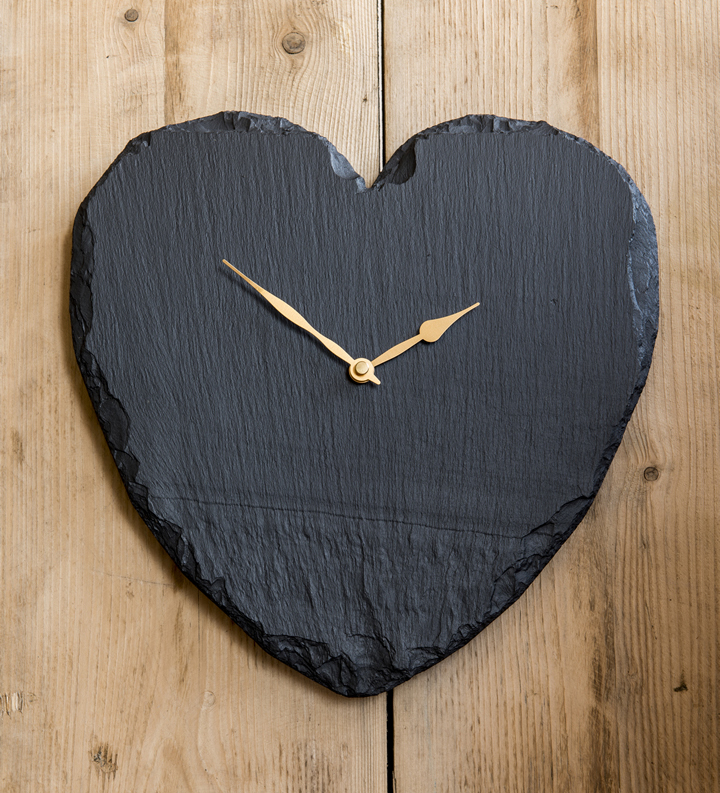
Cariad  Welsh slate clock  MHLV

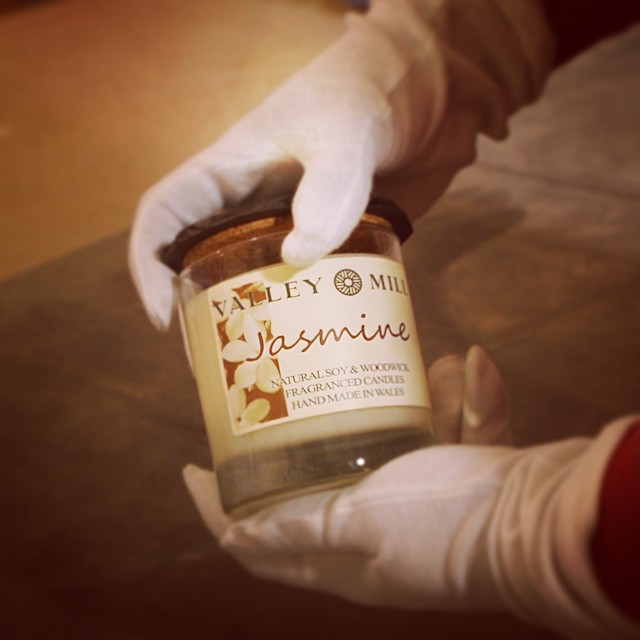
What’s more, we also stock a variety of Welsh wines, chocolates, fragranced soy candles and natural soaps. There is something for everyone and we’re proud to say that each and every product is made in Wales. If you’re feeling romantic, take a look at our website www.slate-house.co.uk or pop to our shop in Neath. If a unique and special gift is the order of the day, we can certainly help you to find one.

And if it turns out that your trip to the letterbox is in vain this year, just remember that you don’t have to wait for someone else to treat you!
 

Slate House

Trade Secrets: Handcrafting Welsh Slate

September 18, 2015
Welsh slate

Over the past 8 years, Slate House has been creating Welsh slate homeware and gifts, slate house signs, memorial plaques, and grave plaques, and awards for customers all over the world including well known brands such as NATO, CADW, NHS, Red Bull, The National Trust, BAFTA Cymru, NFU Mutual, Marriott Hotels and many more. We are also supplying over 130 shops in the UK – and the list is still growing at a respectable rate.

Part of the reason for this growth is our ongoing approach to process improvement. 8 years ago the company consisted of 1 person and a shed; these days the Slate House manufacturing team is housed in a 300 square meter workshop equipped with the right tools and experience to produce a unique range of products, which is constantly growing in popularity.

The other reason for our growth is our loyalty to one of Wales’ great commodities – Welsh Slate. If you don’t know much about Welsh slate, it is the toughest and most durable slate known to man, has very little impurities and when oiled, has a beautiful deep grey colour. Of course, this combination of qualities makes it the perfect choice for homeware.

The slate we use is mined in Blaenau Ffestinniog and is renowned for being the finest in the world; deservedly so. It’s the quality and purity of 500 million year old Welsh slate that sets it apart from alternatives – and in turn, it’s what distinguishes our products from other items on the market. The slate is brought to our workshop in Crynant, south Wales, where we painstakingly hand-cut each piece.

To give you an idea of the process which each piece of Welsh slate goes through before it gets to your home, we’ve put together a step by step guide… You could also take a look at our ‘Handcrafting Welsh slate video’, which gives you a sneak peek into our workshop!

Step 1:

To make any of our Welsh slate homeware products, we must first mark out the desired shape onto the rear of the slate.

Marking slate

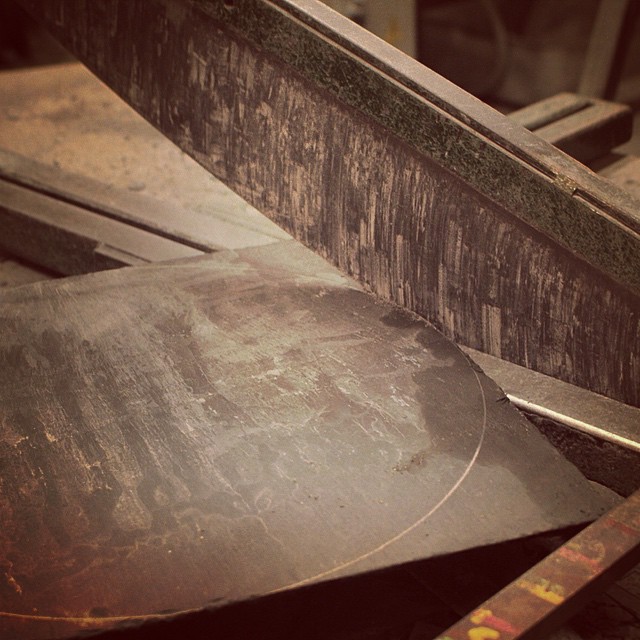
With the chipped edge facing down, we then cut up to the line with a hand guillotine.

As the guillotine is cutting through the slate, it creates a rustic chipped edge on the underside. Once the shape is cut out, we then need to check that there are no loose pieces around the chipped edge and tap away any sharp corners.

Cutting slate

For the picture frames, we also need to use a bridge cutter to remove the centre cut out then file the corners with a diamond file.

Step 2:

Once we have our Welsh slate cut to size, we apply a food-safe oil/sealant, which also enhances the colour of the slate. We apply this special oil with our custom-built scrubbing machine, which simultaneously removes any dust spots and any loose bits .

Oiling Slate

Step 3:

The Welsh slate is left to dry overnight. Once the oil is dry we can then finish the products as required. For all tableware we use large 3mm thick natural cork pads on the underside of each piece.

Cork pads

All products are then tied and tagged before being boxed, ready for the customer.

Slate coasters

Of course; once the items are finished we can then engrave any Welsh slate product for a multitude of uses, but that’s another story.

…And that’s when our Welsh slate products find themselves being transported to any number of destinations. Not only do we fulfil orders from our website, we also have a retail shop in Neath where, alongside our own products, we also sell a wide range of gifts and homeware, all made in Wales. Of course.

Have you seen any Slate House Welsh slate homeware on your travels?

Events and Days Out

Discovering the Magic of Castell Coch…

June 15, 2015
Castell Coch

Regular visitors of the Slate House website will be aware of the Welsh slate products we hand craft and sell from our website and shop in Neath. However, you may not be aware that from our workshop in Crynant, we actually stock hundreds of gift shops, all over the UK with our Welsh slate products, soy candles and natural soaps.

Most recently, Cadw, the Welsh government’s historic environment service has become one of our stockists, which means that Slate House products are now available in the gift shops of various historic landmarks around Wales, including Caerphilly Castle and Castell Coch. In celebration of this, we went along to both sites to find out a little bit more about them. In this, our first Cadw blog, we take you through our experience of Castell Coch…

The fairytale castle

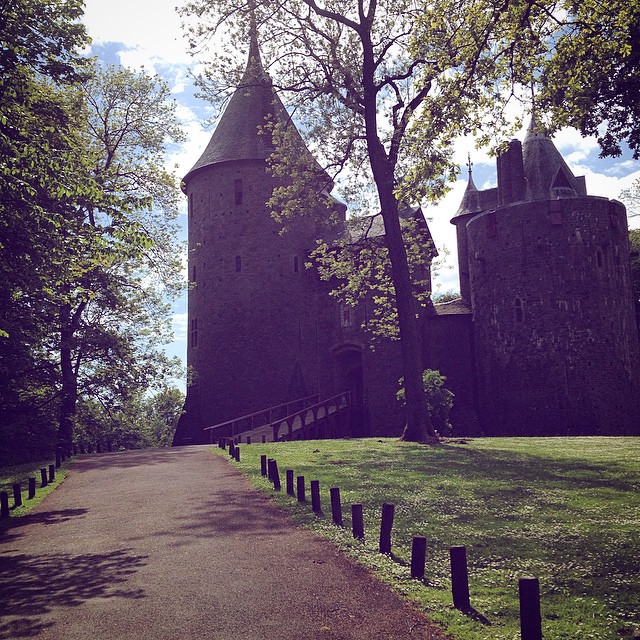
Firstly, anyone who has driven the A470 between Cardiff and Pontypridd will be well aware of Castell Coch (or in English, Red Castle). It rises up and out from the mountainside, its red stone exterior almost glistening as you drive past it on the road below. I remember when I was younger, my friends and I would call it the “fairytale castle” and gaze up at it in wonder every time we passed it on our way to and from Cardiff on various family outings and shopping trips.

Indeed, it would be fair to say that the majority of children in South Wales have done the same. There’s something about the castle which really captures the imagination and even now, I can truthfully say that as I approached the castle drawbridge, I was excited to see what Castell Coch had in store for me.

Eccentricities and dreams

Although it rests on ancient foundations (the first castle on the site was built around 1001) in reality Castell Coch is relatively modern. In very simple terms, it is the product of an incredibly wealthy man and his exceptionally talented and eccentric sidekick.

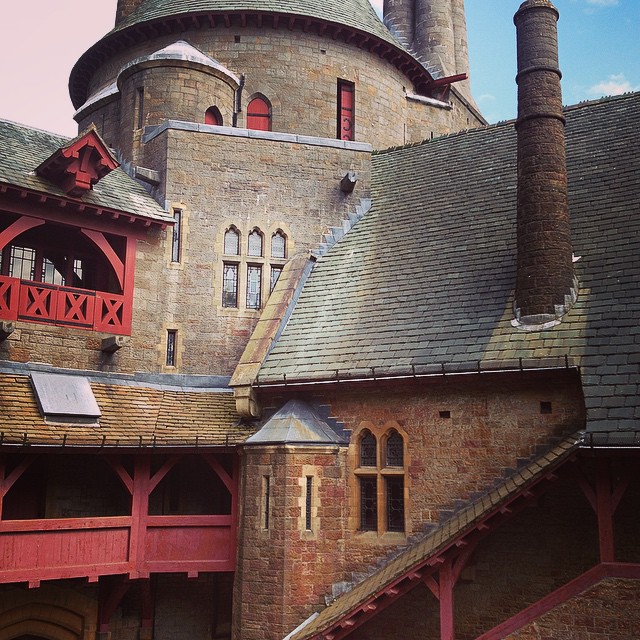
Castell Coch Windows

John Patrick Crichton-Stuart, the 3rd marquess of Bute, was a man with a lifelong interest in architecture and with the accumulated wealth of his father at his disposal, he wanted to create a rural retreat to complement the opulence of his main residence, Cardiff Castle. To fulfil his dream, he enlisted the help of William Burgess.

Castell Coch Fireplace

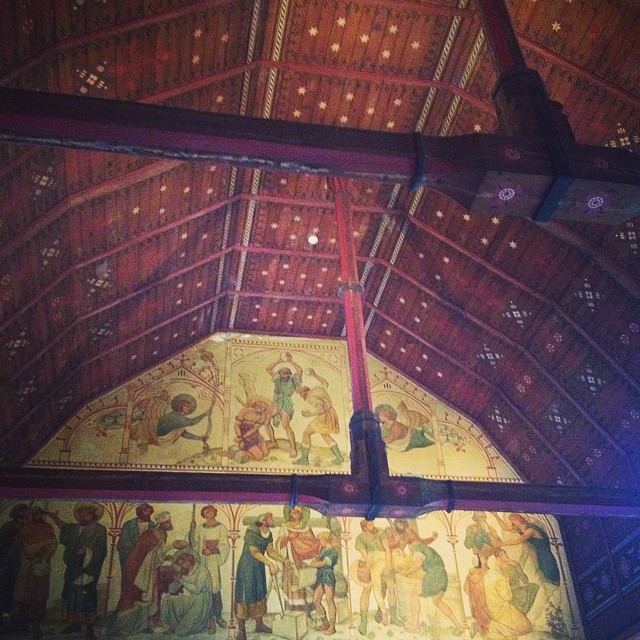
As the Cadw audio guide seamlessly takes you around this magnificent piece of Burgess’ imagination, you realise that the meeting of minds between these men created something quite spectacular! As you enter the grand banqueting room, you can’t help but be taken aback by the sheer detail which surrounds you. On every single wall surface, there is something different and intriguing to gaze at – and the audio guide talks you through the meanings of each image and sculpture.

Castell Coch Ceiling

When it comes to aspects of the décor, a personal favourite of mine just has to be the drawing room ceiling – which is lavishly adorned with a multitude of stars and butterflies. It is only when you listen to the guide however, that the symbolism in this room truly comes to life. It really is something very special.

Castell Coch Decor

As I climb and descend the numerous spiral staircases, I am the little girl again who gazed up at the castle some years ago – playfully (and secretly!) imagining I am the marquess’ wife, Gwendolen, tentatively stepping down, modestly raising my Victorian dress above my ankle, so as not to trip on my way to luncheon!

Calm and tranquillity

It’s not difficult to understand why so many brides and grooms choose to have their wedding ceremony here. There’s a magic in and around the castle which is difficult to explain – but easy to experience. Even as I head back to the car, as I look up into the trees there is a sense of serenity; you would never guess you were just a stone’s throw away from one of the busiest roads in South Wales.

It’s that sense of calm which I suppose inspired the marquess of Bute to create this summer residence. Sadly though, the castle, however beautifully appointed, was seldom used. Thankfully for us, the 5th marquess of Bute placed it into the care of the state and now that Cadw has responsibility of it, we can rest easy that it will be preserved for further generations of little (and much bigger!) children to enjoy.

At Slate House we’d highly recommend a visit to Castell Coch – not only to visit the castle itself, but to also enjoy the land surrounding it and nearby walks. When it comes to days out in Wales, it has to be one of the most interesting and magical of the bunch. For more information, visit http://cadw.gov.wales/daysout/castell-coch/?lang=en

Slate House

Trade Secrets: Making Soy Wax Candles

March 25, 2015
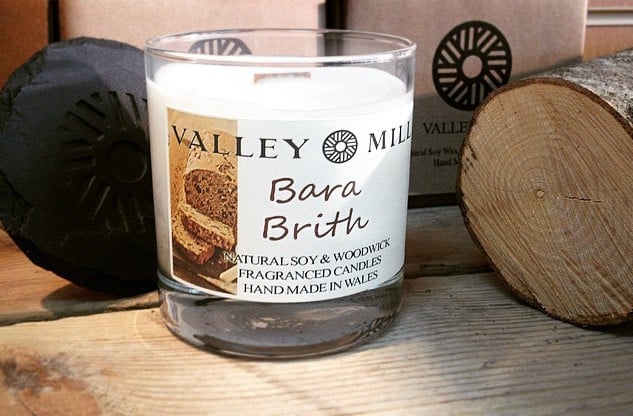
Bara Brith Candle

Over the past few years, the Slate House team has been practising the art of candle making and through many, many trials we have developed a technique and finished product to be proud of.

If you haven’t seen them yet, Slate House’s soy candles are made with 100% natural soy wax and have large wooden wicks. The wick is a very important aspect of any candle – a wooden wick allows for a full melt pool, which means no wax is wasted when the candles are burned. Additionally, a large melt pool means a better scent-throw; a major plus point when it comes to fragranced candles. They are housed in a very chunky, good quality 12oz glass tumbler and capped with a hand made Welsh slate topper, which doubles up as a coaster when the candle is fully burned. 

We’ve worked tirelessly to ensure that our soy candles are up there with the very best and our customers are continually recognising how good they really are. The best part is, they’re not mass-produced in a far-away country by a faceless company. They’re hand made in South Wales by people who believe in craftsmanship and quality. So to give you an insight to the process involved before they sit on your sideboard, here’s a step by step guide to how we make them…

Step 1:

Firstly we turn on our wax cooker and fill it with natural soy wax – it melts at around 60 degrees Celsius.

While we wait for the wax to melt, we lay out the tumblers onto our heated table. We’ve learned that it’s really important to ensure that the glass is warm when the wax is poured. If it’s not, when the wax starts to cool, it can separate from the glass container, leaving a slight gap between the glass and the wax. The heated table also prevents the wax from cooling too quickly – if this occurs, the candle will crack. With this in mind, gradual cooling is a top priority when it comes to producing quality candles.

11032916_1589565894619089_880553440_n


Step 2:

Once the wax has melted and the tumblers are warm, we need to prepare the scent. We use 20ml per candle, which equates to 7% scent. As we pour five candles at a time, we need 100ml of scent per pour.

Candle scent

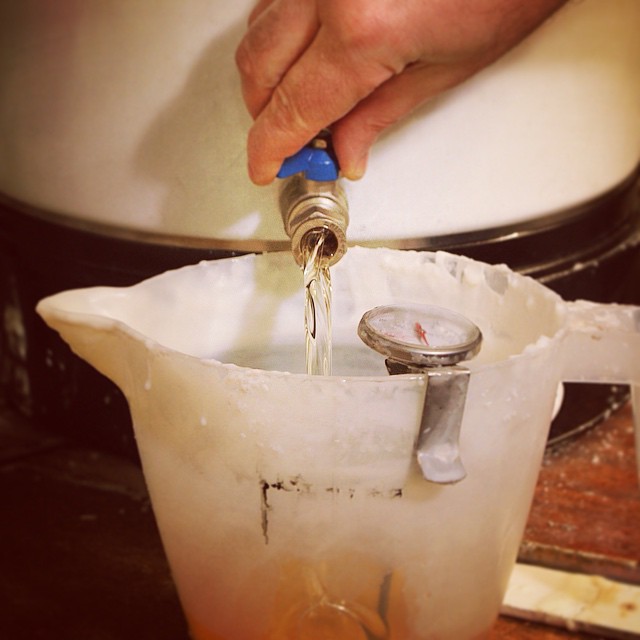
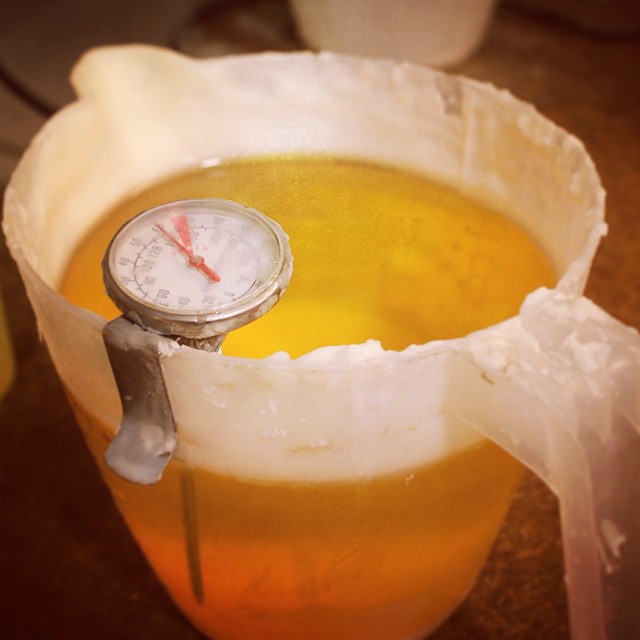
We then pour 1.5 litres into a jug and check the temperature, which needs to be between 58 and 62C. It’s a delicate process and if it’s too cold, we pour the wax back into the cooker and increase the temperature slightly. Equally if it’s too hot, we will have to wait for it to cool down.

Once the correct temperature is reached, we can pour the scent into the jug and give the wax a good stir, not leaving it too long as the wax does cool down slightly as soon as you pour the scent in.

Candle wax   Candle wax temperature


Step 3:

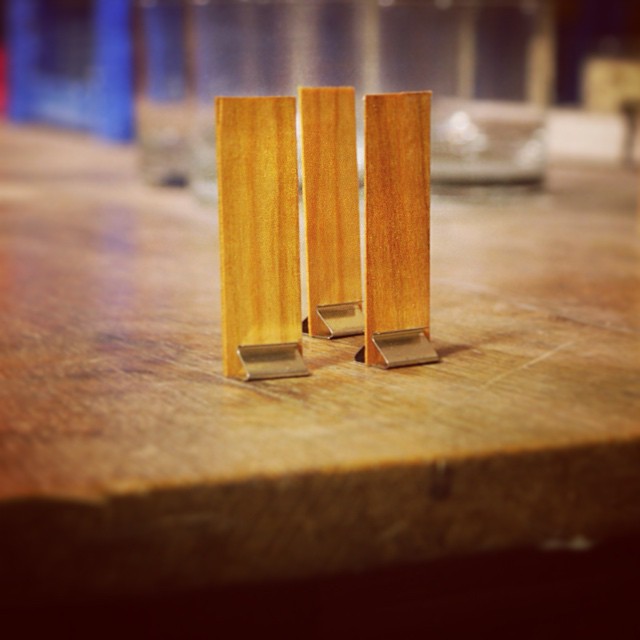
We place the wooden wick  into the glass tumblers, making sure they are central and secure. When we first started to make soy candles, we placed the wicks into the tumblers later in the process – but in line with our drive to continually improve and progress, we found that adding them before the wax is poured allows for a better finished product.

We slowly pour the wax into the tumblers, careful to avoid creating too much disturbance in the glass, as this will create bubbles and air pockets when the candle sets.


Pouring candle wax   10838458_1559217457662217_577725111_n


Step 4:

We repeat this process for a full batch of 100 candles and then cover them to avoid any contamination – and help to keep the heat in for as long as possible. We can then turn the heated table off and wait for 24 hours.

Step 5:

After the candles are set, we use a heat gun to re-melt the tops of the candles, removing any surface irregularities that can be caused by trapped air.

Handmade soy wax candles


Step 6:

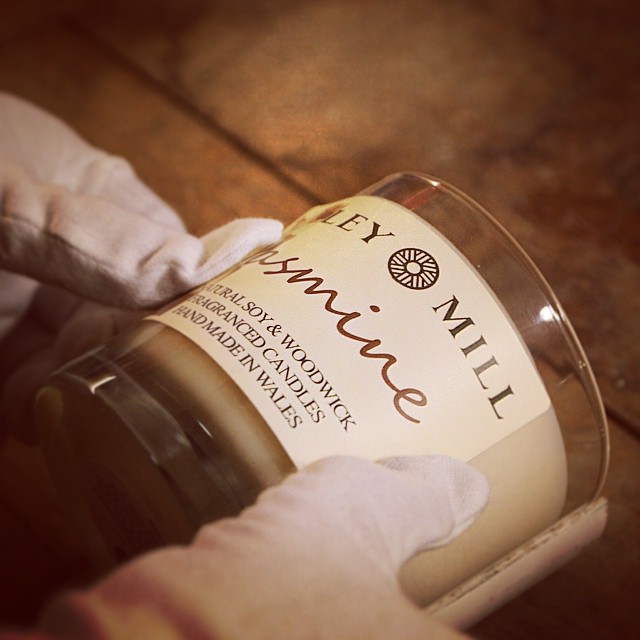
Once the candle tops are flat, all that’s left to do is give them a wipe over to make sure there are no wax drips. We then apply the stickers and box them up, ready to be distributed. All of our soy candles come gift-boxed, as standard.

Candle stickers   Welsh slate candle topper


We send our natural soy wax candles all over the world and stock a number of UK gift shops, including our own store in Neath town centre. Our Welsh Cake and Bara Brith candles are proving very popular recently – but although we may be biased, if you ask us, all of the Slate House candle fragrances are outstanding!